Beyond the Ramp: Why New Zealand's Definition of Access Needs to Change
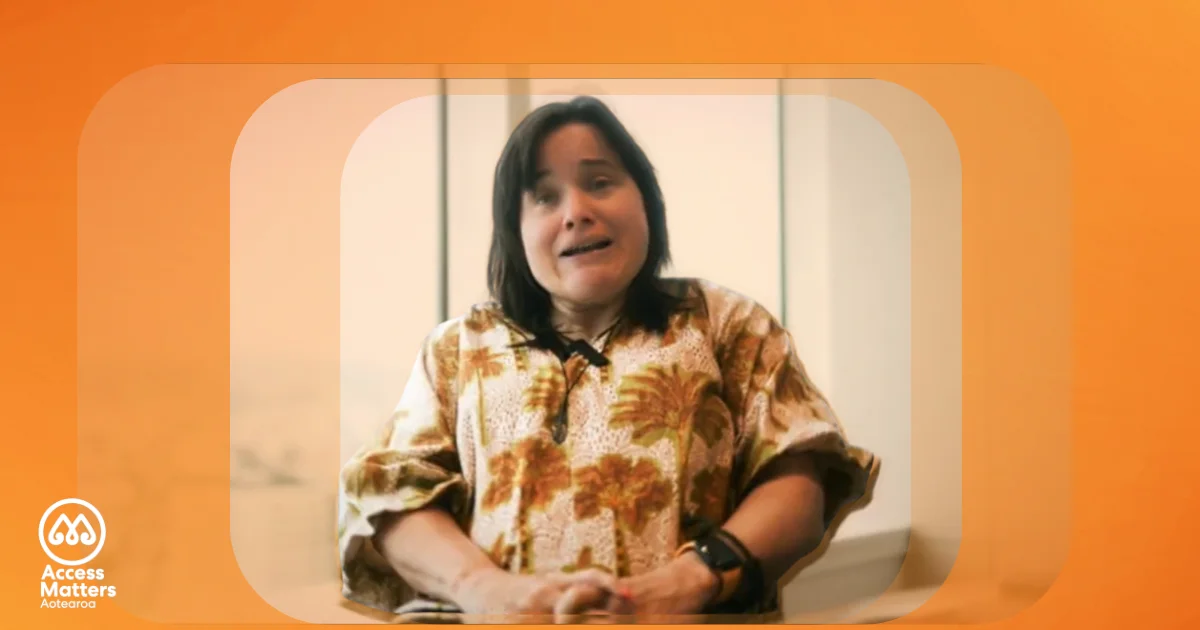
For Amy Hogan, getting through the door has never been the hard part. It's what happens next that matters.
Hogan, Co-chair of Access Matters Aotearoa and a researcher and writer at the Cerebral Palsy Society of New Zealand, has spent years making the case that true accessibility is not a ramp and a wide doorway. It is the full, unobstructed ability to work alongside your peers, build a career and live independently. "It is extremely frustrating, as a young professional, that the current definition of access doesn't go beyond a ramp to a door," she says. "I need to be able to get through that door and into a space that lets me work as an equal amongst my peers, have fulfilling employment and be financially independent."
It is a deceptively simple idea. And yet, for more than a quarter of New Zealand's population, it remains out of reach.
Access Matters Aotearoa is the coalition driving the push for change. A non-partisan advocacy trust made up of disabled people's organisations, service providers and community advocates, the organisation is campaigning for an Accessibility Act that would introduce enforceable standards, an independent accountability body and a clear process for identifying and resolving barriers. The argument is not purely moral. An accessible Aotearoa is a smarter, more productive one, with economic participation opening up for people who are currently locked out of it.
What Amy's message makes plain is that accessibility is not a single checkbox. It spans physical infrastructure, digital systems, transport, employment environments and sensory needs. Platforms like AccessMaps are already putting this into practice, giving organisations and local councils the tools to map and communicate the full spectrum of access across their buildings and cities. Knowing there is a ramp is one thing. Knowing the entrance is step-free, the lift is working, the signage is readable and the bathrooms are compliant is what actually helps someone plan their day.
The legislation Access Matters is advocating for would make this kind of comprehensive thinking a legal expectation rather than a courtesy. Until then, the gap between good intentions and genuine inclusion remains wide.
As Hogan has said publicly, it is not enough to get people to the door. We need to make sure they can walk through it, and belong on the other side.
To learn more about Access Matters Aotearoa visit accessmatters.org.nz. To see how AccessMaps is helping organisations and cities become genuinely accessible visit accessmaps.com.