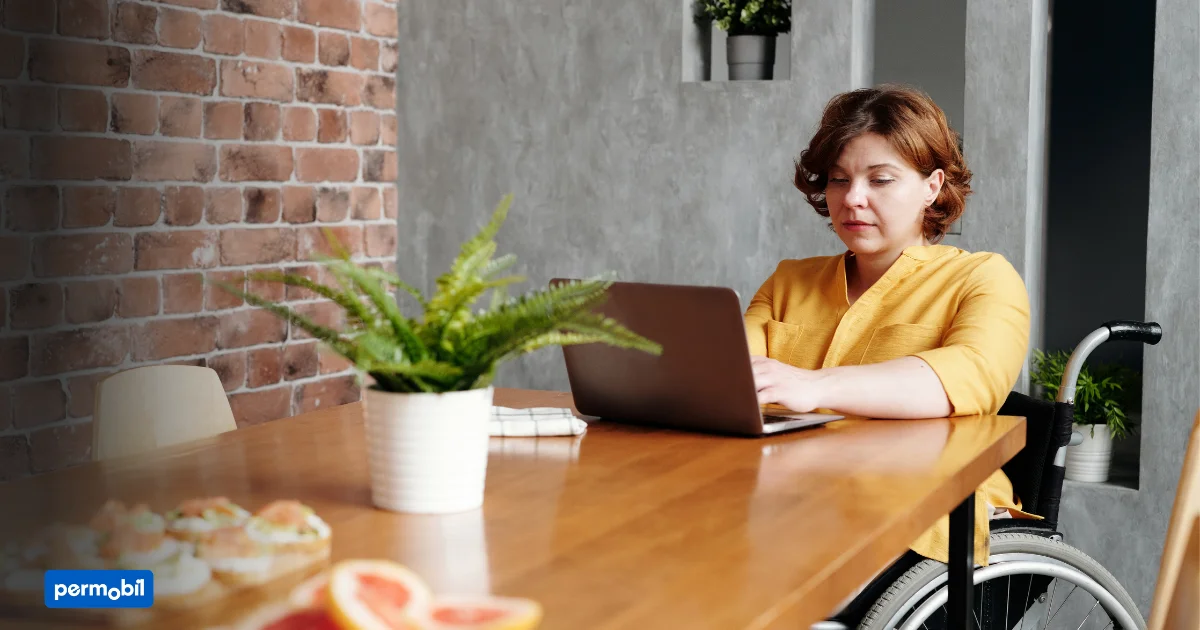
The Workplace Belongs to Everyone
A landmark guide from global mobility technology leader Permobil is giving businesses the tools to create spaces where every employee can truly thrive.
Every morning, people navigate their way to work. They park the car, walk through the front door, ride a lift to their floor and settle in at their desk. For most, this is unremarkable. For the one in four New Zealanders living with a disability, that same journey can involve obstacles invisible to everyone else.
A publication from global mobility technology company Permobil is setting out to change that. The Workplace Accessibility Guide, now in its second edition, is a practical and plainspoken resource designed to help organisations of all sizes audit and improve the physical spaces their people use every day.
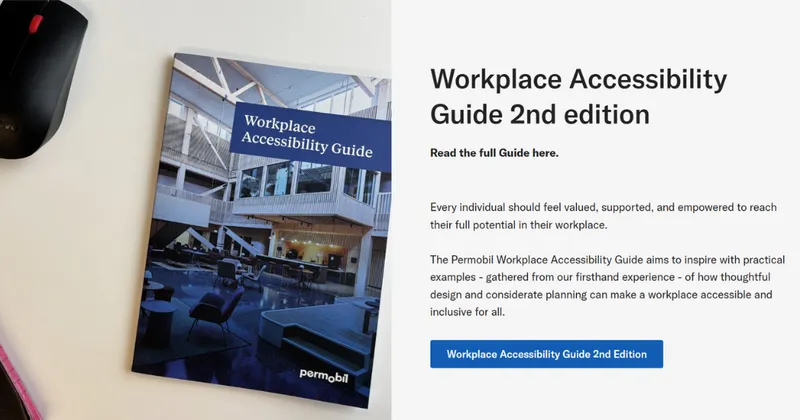
"When accessibility and inclusion meet, workplaces evolve into thriving hubs that boost wellbeing, spark collaboration and empower every individual to contribute at peak capacity," writes Permobil President and CEO Chuck Witkowski in the guide's foreword. "That's when teams thrive. That's how societies advance."
What Does Accessible Actually Mean?
The word "accessible" is used freely in modern workplaces but is often understood narrowly. A ramp at the front door or a wider toilet cubicle is a start but it is far from the full picture.
Rim Alexandra Halfya, Founder and COO of Combify and a wheelchair user, puts it plainly. "Accessibility shouldn't be built on the assumption that someone will always be there to help. The real hindrance isn't the physical disability but a built environment that doesn't work for everyone."
Her experience captures the core argument of the Permobil guide: accessibility is not about accommodating a minority but about designing spaces that function properly for every person who enters them. When it does, the benefits extend well beyond those with disabilities. Wider corridors help parents with prams. Automatic doors assist someone carrying a delivery. Height adjustable desks benefit anyone who spends long hours seated.
Workplace Inclusion Specialist Ross Hovey frames it as common sense. "Accessibility isn't about fixing something for one person as it benefits everyone. Anyone can become disabled at any time, so inclusive design prepares workplaces for the future."
Starting at the Beginning: Arrival and Entry
The guide begins where every workday begins: getting there and getting in.
Car parking is the first point of contact many visitors and employees have with a workplace. Accessible spaces should be clearly marked, positioned close to building entrances and wide enough for a wheelchair user to transfer safely. One recommendation that may surprise facilities managers is the suggestion to add weather cover over accessible parking areas. For wheelchair users this is not a matter of comfort but of practicality. A wet seat cushion can create real skin integrity issues for people with limited mobility or sensation.

At the entrance the guide recomends large automatic doors with no thresholds or inclines. Foot operated door switches are highlighted as a simple and cost effective addition that allows people to open powered doors without using their hands.
The reception area sets the tone for the entire visit. The guide recommends dual height reception counters so that seated visitors can make eye contact and communicate comfortably with staff. Using contrasting colours between height levels aids visitors with visual impairments. A designated crutch holder removes a common tripping hazard and signals that the space has been thoughtfully considered.
Moving Through the Building
Corridors are perhaps the most telling indicator of a workplace's accessibility. The guide makes a point that is both practical and quietly powerful: if a wheelchair user cannot move alongside a colleague but must travel ahead or behind them, the space has failed at inclusion. Wide corridors also benefit everyone during emergency evacuations and reduce congestion during busy periods.
Staircases should have continuous handrails that extend beyond the top and bottom steps and use contrasting colours so railings stand out against walls. Tactile indicators on the handrail can help users with visual impairments identify which floor they are on without needing to read signage.
Lifts are covered in detail. Beyond accessible button heights and sufficient interior space, Permobil recommends voice attendants that announce floor levels and directions of travel. Mirrors inside the lift allow wheelchair users to reverse out safely. For new builds or major refurbishments the guide strongly advocates for double sided lifts where users can drive straight through on exit.
Where Work Actually Happens
Height adjustable desks are increasingly common in modern workplaces but the guide highlights that the benefit extends to wheelchair users who need a surface they can roll under comfortably. Conference room chairs with wheels allow anyone to reposition themselves and give wheelchair users the flexibility to choose their own spot. Power sockets placed at accessible heights are a detail that is frequently overlooked but matters enormously to someone who cannot bend to reach a socket near the floor.

Acoustic design is also highlighted as an accessibility issue rather than simply a comfort one. For people with hearing impairments, echoing rooms or poor sound separation between spaces can make participation genuinely difficult.
Erik Svensson, a Senior Development Engineer at Permobil who uses a wheelchair, speaks to the cumulative effect of these details. "Having a truly accessible workplace makes everyday life smoother, reducing stress and increasing happiness and inspiration at work." His advice to employers is direct: consider accessibility from the earliest stages of a building's design. Retrofitting is possible but it is always more expensive and less elegant than building inclusively from the start.
Social Spaces and the Right to Belong
Some of the guide's most thought provoking recommendations relate to spaces outside formal work: the kitchen, the refreshment station and the cafeteria. These are the spaces where workplace culture is built, where informal conversations happen and where people feel whether or not they genuinely belong.
The guide recommends that coffee and refreshment stations have counters at two heights with clear knee space underneath the lower bench so wheelchair users can approach directly. Drawers are recommended over cabinets throughout kitchens because they allow users to see and access contents without bending or reaching. In the cafeteria the guide calls for flexible furniture arrangements including chairs that are easy to remove so wheelchair users can choose where they sit.

Louise Vidlund, a digital creator and wheelchair user, speaks to how small obstacles in social spaces send a powerful message. "Many organisations still need to adopt an inclusive mindset and design spaces that work for everyone. Accessibility isn't just about physical access. It's about inclusion."
Where to Start
For organisations wondering where to begin, the message is clear: start somewhere.
"You'll never achieve perfection for everyone but striving for inclusion matters," writes Ross Hovey. "Aim for progress, not perfection."
The guide is structured to support exactly this approach. Each section covers a single area of the workplace and within each section recommendations are divided into immediate practical steps and longer term improvements. No organisation is expected to achieve everything at once. The goal is to make accessibility a continuous practice rather than a one time project.
Gem Turner, a content creator and disability advocate, argues that the conversation must include disabled people at every level of an organisation. "We have to make sure all parts of our working environment are accessible: physical, attitudes, structures and communication. It's not a good thing to do. It's the right thing to do."
Accessibility legislation sets a floor, not a ceiling. Meeting the minimum legal requirements is not the same as creating a workplace where everyone can participate fully and independently. The Permobil guide does not ask organisations to do something extraordinary. It asks them to do something necessary.
The Workplace Accessibility Guide is freely available via Permobil's website.