Pāpāmoa Sports & Recreation Centre

Accessible to visitors who:
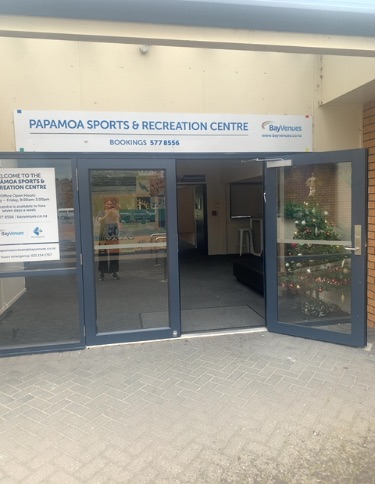
- The main entrance and pathway are accessible, providing step-free access to the venue.
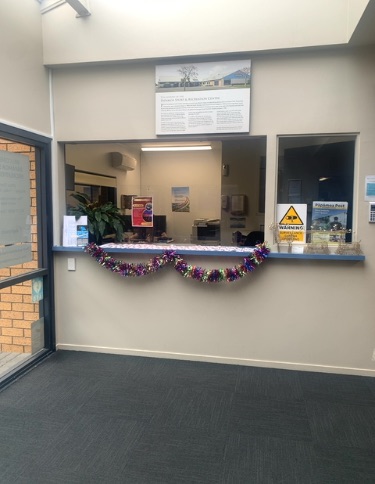
- The reception area is easy to navigate for visitors using wheelchairs, powerchairs, mobility scooters, or walking aids.
- All entrances, passageways, and doorways have a minimum width of 0.81 metres and accommodate people using mobility devices.
- Doors are easy to open by people who may not use both hands or arms.
- Kitchen facilities are generally available to visitors and are easily accessible to people who use wheelchairs or mobility aids.
- Evacuation routes are accessible to people using wheelchairs, powerchairs, mobility scooters, or walking aids.
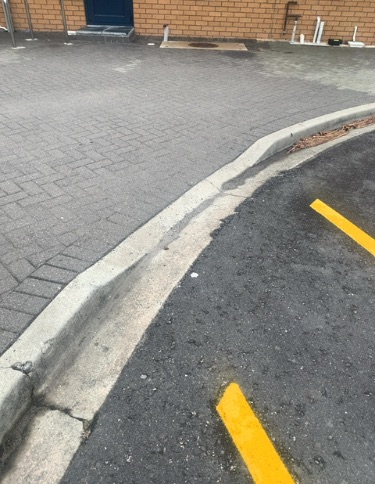
- The bridge to the main entrance has a significant dip that can be a challenge for wheelchairs or walking frames.
- All flooring, including ramps and accessible footpaths, does not have non-slippery surfaces to prevent accidents and falls.
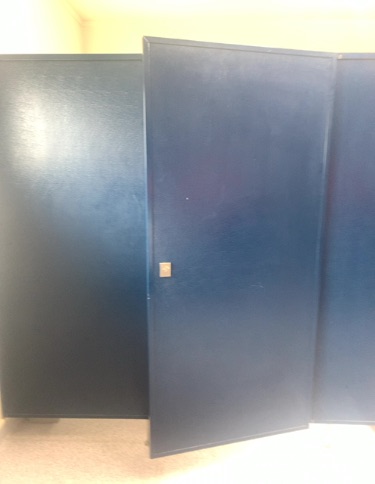
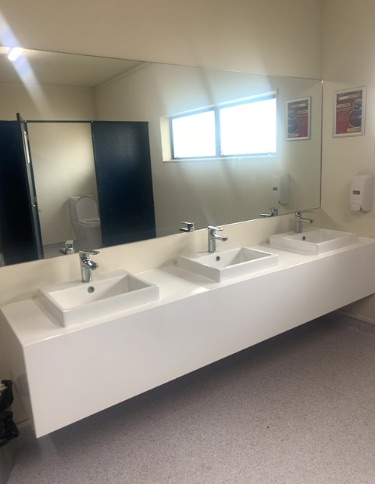
- The venue has clearly labelled accessible restrooms with more than one accessible bathroom stall.
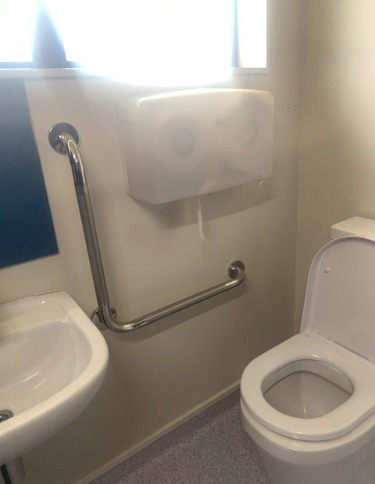
- Grabrails are available and easily accessible to a person seated on the toilet.
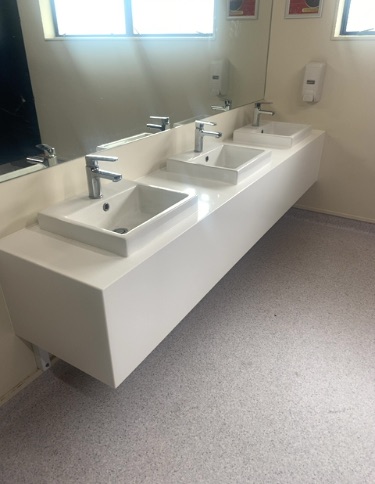
- The bathroom mirror is at an appropriate height for a person who uses a wheelchair.
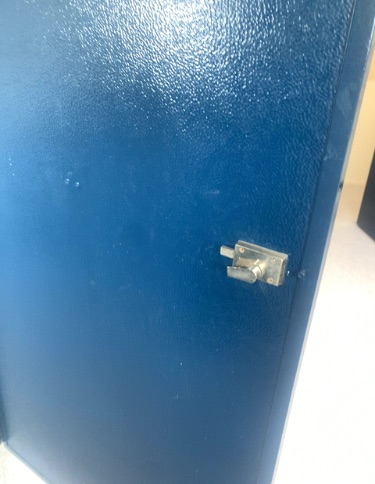
- The restroom door can be opened, locked, and unlocked using one hand, and staff can unlock it in an emergency.
- Restroom handwashing and drying facilities are not within easy reach of a person who uses a wheelchair.
- The restroom interior does not meet the required dimensions (2 metres x 1.6 metres) for powerchair users to self-transfer.
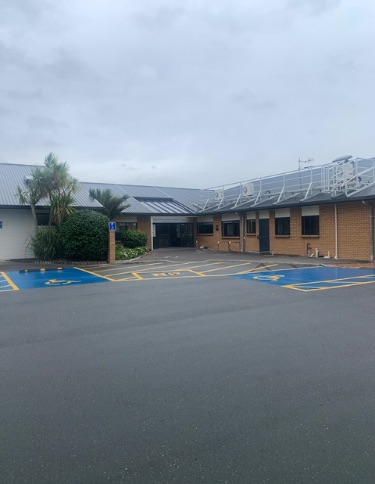
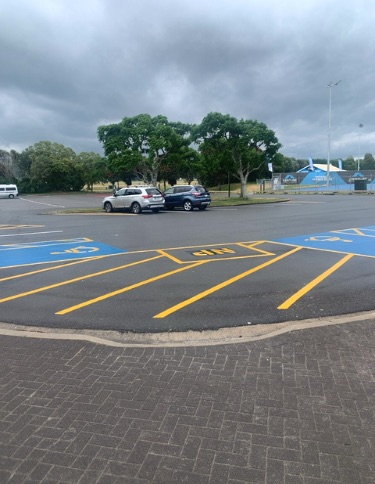
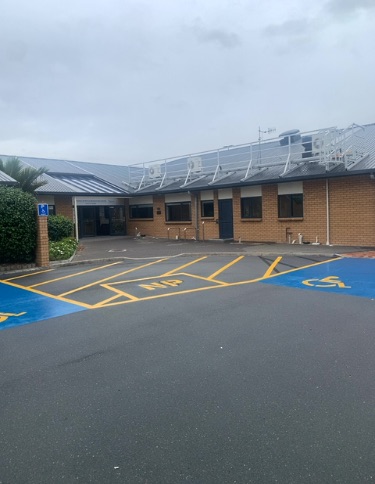
- Designated and clearly marked accessible parking spaces are available.
- The main entrance or meeting point is located within 20 metres of the closest accessible parking space.
- There is sufficient room by the parking space for people to transfer to their wheelchairs, powerchairs, or mobility scooters.
- The car park is well-lit at night.
- Designated drop-off and pick-up points are available to ensure safe and convenient access.
- There is no safe footpath leading to the entrance for people who are blind or experience low vision.
- The pathway leading to the main entrance does not have tactile ground surface indicators.
- Activities are not held in environments suitable for participants who are blind or experience low vision (e.g., lacking even, non-slip flooring and unobstructed pathways).
- Staff are available to assist visitors with blindness or low vision if needed.
- Activities are not held in environments suitable for participants who are deaf or experience limited hearing, lacking clearly displayed signs or graphics.
- Evacuation plans take into consideration individuals with deafness or limited hearing.
- Emergency alert systems produce both audio and visual warnings (e.g., an alarm and flashing lights).
- It is unclear if closed captions, subtitles, or Sign Language interpretation are available for videos used in events or activities.
- Activities are held in environments suitable for participants who are neurodiverse.
- A designated breakout room or quiet space is available for visitors who require it.
- Participants can easily remove themselves from activities if they experience sensory overload or discomfort.
- Staff are able to intervene quickly if audiovisual systems project sound or graphics that may induce seizures or be distressing.
- The venue can adjust the temperature of all indoor venues and create temperature-controlled spaces.
- Activities do not offer a wide range of sensory experiences and stimuli for visitors with sensory modulation needs.
- Only service dogs are welcome on the premises.
- Service dogs can enter all of the same spaces in which their owners are welcome.
Venue accessibility summary
Pāpāmoa Sports & Recreation Centre offers accessible main entrances and designated parking within 20 metres. While it provides multiple accessible restrooms with grabrails and mirrors at appropriate heights, handwashing facilities are not easily reachable for wheelchair users, and the interior is not wide enough for powerchair transfers. Key barriers include a lack of non-slippery flooring throughout the venue and no safe footpath or tactile indicators for visitors with blindness or low vision, which impacts activity suitability for these groups.
Visitor experience
- Visitors can reach the site using public transport, with bus services available.
- The closest public transport stop is not located within 200 metres of the venue entrance.
- Designated drop-off and pick-up points are available to ensure safe and convenient access.
- Clear directions, signs, and maps are available to guide visitors through the venue.
- A sheltered space is available for visitors to use in the event of sudden bad weather.
- Participants can easily remove themselves from activities if they experience sensory overload or discomfort.
- Staff can quickly intervene if audiovisual systems project sound or graphics that may induce seizures or be distressing.
- A designated breakout room or quiet space is available for visitors who require it.
- The venue can adjust the temperature of all indoor venues and create temperature-controlled spaces for visitors who require controlled room temperatures.
- Activities do not offer a wide range of sensory experiences and stimuli for visitors with sensory modulation needs.
- The venue hosts events and activities, some of which use audiovisual equipment.
- Activities are held in environments suitable for neurodiverse participants.
- Staff are able to intervene quickly if audiovisual systems project sound or graphics that may induce seizures or be distressing.
- Activities are not held in environments suitable for participants who are blind or experience low vision, or for those who are deaf or experience limited hearing.
- It is unclear if closed captions, subtitles, Sign Language interpretation, or audio descriptions are available for videos used in events or activities.
- Some staff have received workplace education and training on accessibility and inclusion for visitors.
- Staff members are aware of accessible features and services available within the venue and can provide assistance when needed.
- Staff can assist visitors who do not communicate verbally, and those with blindness or low vision, intellectual disabilities, or acquired brain injuries if needed.
- Staff are available to help if emergency escape routes are not immediately accessible to people requiring mobility assistance.
- Staff are on-site Monday to Friday from 9 am to 3 pm and aim to accommodate all visitor needs.
- The organisation is looking to expand its accessibility practices, staff knowledge, and organisational goals around accessibility.
Wheelchair & Mobility Scooter Access
- The main entrance and pathway are accessible, providing step-free access to the venue.
- The reception area is easy to navigate for visitors using wheelchairs, powerchairs, mobility scooters, or walking aids.
- All entrances, passageways, and doorways have a minimum width of 0.81 metres and accommodate people using mobility devices.
- Doors are easy to open by people who may not use both hands or arms.
- Kitchen facilities are generally available to visitors and are easily accessible to people who use wheelchairs or mobility aids.
- Evacuation routes are accessible to people using wheelchairs, powerchairs, mobility scooters, or walking aids.
- **Note:** The bridge to the main entrance has a significant dip that may pose a challenge for wheelchairs or walking frames.
- **Note:** All flooring, including ramps and accessible footpaths, does not have non-slippery surfaces, which could prevent accidents and falls.
Accessible Parking
- Designated and clearly marked accessible parking spaces are available.
- The main entrance or meeting point is located within 20 metres of the closest accessible parking space.
- There is sufficient room by the parking space for people to transfer to their wheelchairs, powerchairs, or mobility scooters.
- The car park is well-lit at night.
- Designated drop-off and pick-up points are available to ensure safe and convenient access.
Accessible Restrooms
- The venue has clearly labelled accessible restrooms with more than one accessible bathroom stall.
- Grabrails are available and easily accessible to a person seated on the toilet.
- The bathroom mirror is at an appropriate height for a person who uses a wheelchair.
- The restroom door can be opened, locked, and unlocked using one hand, and can be unlocked by staff in an emergency.
- **Note:** Restroom handwashing and drying facilities are not within easy reach of a person who uses a wheelchair.
- **Note:** The restroom interior does not meet the required width for powerchair users to self-transfer (minimum 2 metres x 1.6 metres).
Blindness & Low Vision
- There is no safe footpath leading to the entrance for people who are blind or experience low vision.
- The pathway leading to the main entrance does not have tactile ground surface indicators.
- Activities are not held in environments suitable for participants who are blind or experience low vision (e.g., lacking even, non-slip flooring and unobstructed pathways).
- Staff are available to assist visitors with blindness or low vision if needed.
Deafness & Limited Hearing
- Activities are not held in environments suitable for participants who are deaf or experience limited hearing (e.g., lacking clearly-displayed signs or graphics).
- Evacuation plans take into consideration individuals with deafness or limited hearing.
- Emergency alert systems produce both audio and visual warnings (e.g., an alarm and flashing lights).
- It is unclear if closed captions, subtitles, or Sign Language interpretation are available for videos used in activities or events.
Neurodiverse Support
- Activities are held in environments suitable for participants who are neurodiverse.
- A designated breakout room or quiet space is available for visitors who require it.
- Participants can easily remove themselves from activities if they experience sensory overload or discomfort.
- Staff are able to intervene quickly if audiovisual systems project sound or graphics that may induce seizures or be distressing.
- The venue can adjust the temperature of all indoor venues and create temperature-controlled spaces.
- Activities do not offer a wide range of sensory experiences and stimuli for visitors with sensory modulation needs.
Service Animals
- Only service dogs are welcome on the premises.
- Service dogs can enter all of the same spaces in which their owners are welcome.